
Access to reimbursement for medical devices in France is based on assessment by the CNEDiMTS, which evaluates Expected Clinical Benefit (SA) and Improvement in Expected Clinical Benefit (ASA), followed by inclusion on the List of Reimbursable Products and Services (LPPR). Choosing between brand-name listing and generic description listing, as well as anticipating renewal requirements, are strategic decisions that determine how the product’s value is recognised over time.
Medical Devices: CNEDiMTS Assessment and LPPR Listing
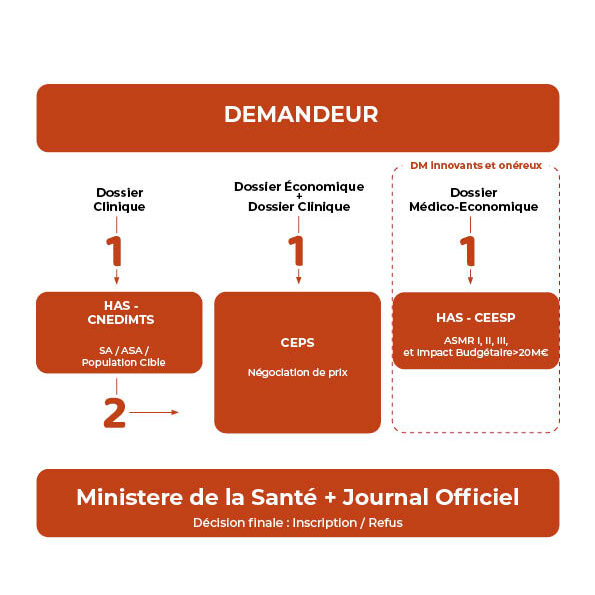
Market Access Pathway for Medical Devices in France

The National Committee for the Evaluation of Medical Devices and Health Technologies (CNEDiMTS) is the equivalent, for medical devices, of the Transparency Committee for medicines. It assesses two criteria:
- Expected Clinical Benefit (SA), which determines whether the device is eligible for reimbursement based on its clinical value and public health benefit.
- Improvement in Expected Clinical Benefit (ASA), which measures the additional benefit compared with existing medical devices or treatment options and influences the scope for tariff negotiations with the CEPS.
For a genuinely innovative medical device, the strength of the clinical dossier — comparative evidence, relevance of the selected comparator and demonstration of organisational or quality-of-life benefits — is crucial to obtaining an ASA rating that adequately reflects the value of the innovation.

Once the CNEDiMTS has issued its assessment and the reimbursement tariff has been negotiated, the device must be included on the List of Reimbursable Products and Services (LPPR) through one of two pathways:
- Generic description listing: the product is included under an existing generic category covering products with similar characteristics and a common reimbursement tariff. This is a faster procedure, but does not allow specific innovations to be individually recognised or a differentiated tariff to be obtained.
- Brand-name listing: an individual assessment by the CNEDiMTS, with specific recognition of SA and ASA and a reimbursement tariff negotiated with the CEPS. This is a longer, more evidence-intensive procedure, but is essential when seeking recognition of genuine innovation.
Choosing between these two pathways is a strategic decision that should be made during dossier preparation, based on the level of clinical differentiation that can genuinely be demonstrated compared with products already listed.

Brand-name listings on the LPPR are granted for a limited period (generally five years) and must be renewed on the basis of real-world evidence and reassessment by the CNEDiMTS. Manufacturers often underestimate the importance of renewal, although it represents:
- A risk of delisting or transfer to a generic description if follow-up data are insufficient.
- An opportunity to negotiate a higher reimbursement tariff if new evidence demonstrates additional clinical benefit.
- A key opportunity to anticipate changes in the competitive landscape and relevant comparators.
Planning real-world evidence collection from the time of commercial launch is essential to securing renewal.
How We Can Help
We support medical device manufacturers in preparing their CNEDiMTS assessment dossiers, selecting the most appropriate LPPR listing strategy for their products and anticipating renewal requirements, in line with their overall pricing and reimbursement strategy.
Frequently Asked Questions
What is the difference between SA and ASA?
SA (Expected Clinical Benefit) determines whether a medical device is eligible for reimbursement. ASA (Improvement in Expected Clinical Benefit) measures its additional benefit compared with existing devices and influences the reimbursement tariff that can be negotiated.
Should manufacturers choose brand-name listing or generic description listing?
Brand-name listing allows specific innovations to be recognised and a differentiated reimbursement tariff to be obtained, but requires a comprehensive CNEDiMTS dossier. Generic description listing is faster but does not recognise the product’s individual differentiation.
What happens when an LPPR listing expires?
The listing must be renewed on the basis of real-world evidence reassessed by the CNEDiMTS. Failure to provide sufficient supporting evidence may result in delisting or transfer to a generic description.